Acts 9:10-19 CSB
There was a disciple in Damascus named Ananias, and the Lord said to him in a vision, "Ananias." "Here I am, Lord," he replied. [11] "Get up and go to the street called Straight," the Lord said to him, "to the house of Judas, and ask for a man from Tarsus named Saul, since he is praying there. [12] In a vision he has seen a man named Ananias coming in and placing his hands on him so that he may regain his sight." [13] "Lord," Ananias answered, "I have heard from many people about this man, how much harm he has done to your saints in Jerusalem. [14] And he has authority here from the chief priests to arrest all who call on your name." [15] But the Lord said to him, "Go, for this man is my chosen instrument to take my name to Gentiles, kings, and Israelites. [16] I will show him how much he must suffer for my name." [17] Ananias went and entered the house. He placed his hands on him and said, "Brother Saul, the Lord Jesus, who appeared to you on the road you were traveling, has sent me so that you may regain your sight and be filled with the Holy Spirit." [18] At once something like scales fell from his eyes, and he regained his sight. Then he got up and was baptized. [19] And after taking some food, he regained his strength. Saul was with the disciples in Damascus for some time.
Saul of Tarsus
God is always at work in the hearts of people, often in ways we cannot see until the dust settles. When we think of dramatic turnarounds, the author of the beloved hymn “Amazing Grace” immediately comes to mind. It is such a beautiful song, and one that I love to hear sung in church as voices are lifted together in worship. The words of the first verse carry a profound weight:
Amazing grace! how sweet the sound,
That saved a wretch like me!
I once was lost, but now am found,
Was blind, but now I see.
Many do not know the history behind those famous lines. The writer, John Newton, lived in the eighteenth century. He was a British slave ship captain who was notorious for his vulgar profanity, cruelty, and deep rebelliousness against God.
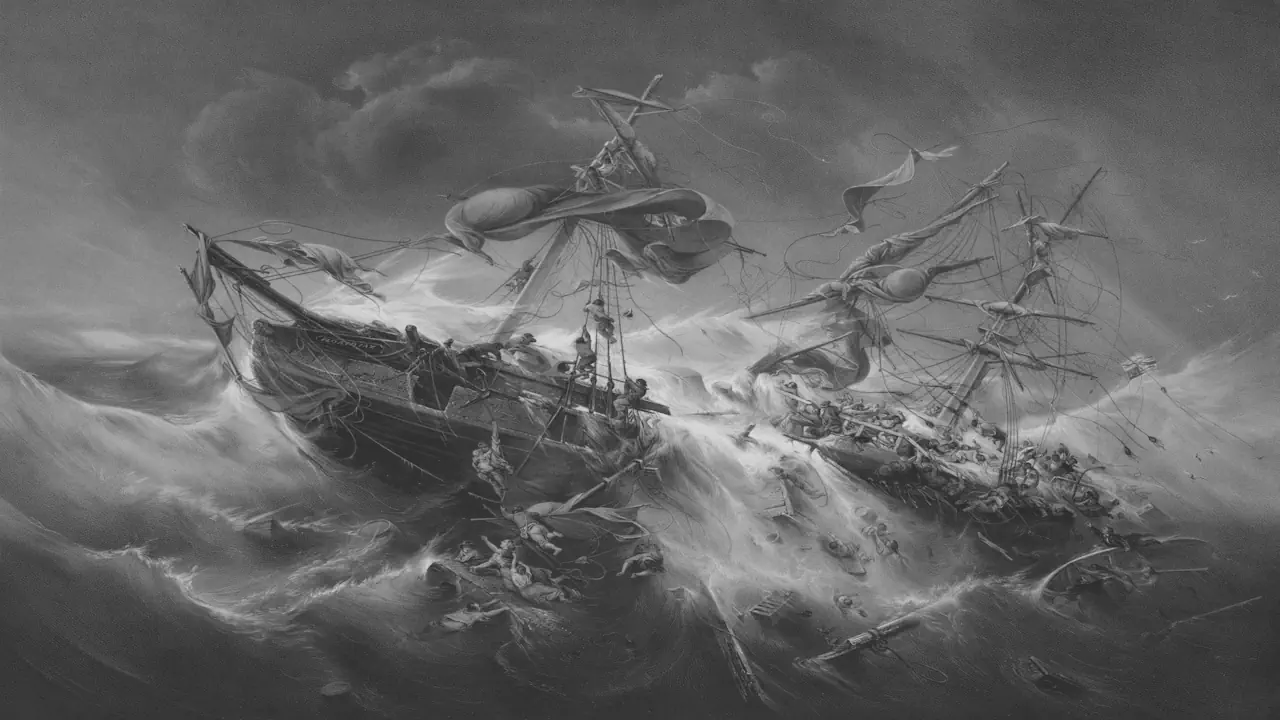
But in March of 1748, while sailing the North Atlantic, Newton’s vessel was caught in a terrifying, deadly grey-water tempest. The storm battered the ship, ripping the sails, filling the cabin with water, and threatening to drag everyone to the ocean floor. Believing he was minutes from death, Newton cried out for mercy—and God answered. It was not the storm that spared his life, but the hand of the Lord. That violent encounter served as the starting point for a gradual, deep spiritual transformation. Newton eventually abandoned the slave trade, became an ordained clergyman, an active abolitionist, and the writer of the hymn that still heals broken hearts today. He came to Jesus a blind wretch, and he was given a brand-new life.
We see this exact same pattern of grace in the life of Saul of Tarsus.
Why wasn’t one of the leading Apostles—Peter or John—sent to minister to Saul while he sat praying, blind and fasting in Damascus? It is enough for us to know that God’s love and wisdom are far above ours, and that His will always works out for the good of those who are called by Him.
Instead of a famous leader, God chose Ananias. We do not know much about Ananias, except that he was an ordinary disciple who knew how to listen. When Jesus spoke to him in a vision, Ananias answered, but he also hesitated. There was real doubt, yet there was also ultimate obedience.
Think of the worst person you know. Perhaps it is someone who has deeply hurt you or someone you love, and they are finally paying for their crime. Now, imagine Jesus telling you to go to them and make arrangements for their release and healing. My human response might be, “But Lord, if they get out, they will just hurt someone else.”
This was precisely the fear gripping Ananias. “Lord,” he answered, “I have heard from many people about this man, how much harm he has done…” Jesus knew the danger, but as the Good Shepherd, He responded to Ananias with a comforting, two-fold promise. First, Saul was a chosen instrument who would carry the Gospel to Gentiles, Jews, and even kings. Second, alongside this great calling, Saul would also learn how much he himself must suffer for the name of Christ.
Ananias chose to trust and obey. He walked down the street called Straight to the home of Judas, found the room where Saul was waiting, and stepped inside. It was there that the miracle of new life took place:
“He placed his hands on him and said, ‘Brother Saul, the Lord Jesus, who appeared to you on the road you were traveling, has sent me so that you may regain your sight and be filled with the Holy Spirit.'”
At once, something resembling scales fell from Saul’s eyes. He could see again. He stood up, was baptized, and embraced his new identity in Christ—the man who would eventually be known to the world as Paul. He stayed with the disciples in Damascus for a time, regaining his physical strength, and immediately began to proclaim Jesus as the Son of God.
Reflection Questions
- John Newton faced a physical storm, and Saul faced a blinding light before they could finally “see.” What did it take in your own life for God to get your attention and open your eyes?
- Ananias had to overcome deep fear and prejudice to call the church’s persecutor “Brother Saul.” Is there someone in your life whom you find hard to view as a potential brother or sister in Christ?
- Saul was filled with the Holy Spirit and baptized before he even had a meal to regain his physical strength. What does this tell us about his spiritual hunger compared to his physical needs?
Prayer
Father,
We thank You for Your amazing grace that saves even the most unlikely of us. Thank You that no storm is too violent for You to calm, and no heart is too hardened for You to soften. Give us the courage of Ananias to step out in obedience, even when You send us to difficult places or difficult people. Help us to see others through Your eyes of mercy rather than our eyes of fear. May the scales fall from our eyes daily so that we can clearly see the work You have called us to do. In Jesus’ Name.
Amen.