Acts 21:37-40 and Acts 22:1-9 CSB
As he was about to be brought into the barracks, Paul said to the commander, "Am I allowed to say something to you?" He replied, "You know how to speak Greek? [38] Aren't you the Egyptian who started a revolt some time ago and led four thousand men of the Assassins into the wilderness?" [39] Paul said, "I am a Jewish man from Tarsus of Cilicia, a citizen of an important city. Now I ask you, let me speak to the people." [40] After he had given permission, Paul stood on the steps and motioned with his hand to the people. When there was a great hush, he addressed them in Aramaic:

"Brothers and fathers, listen now to my defense before you." [2] When they heard that he was addressing them in Aramaic, they became even quieter. [3] He continued, "I am a Jew, born in Tarsus of Cilicia but brought up in this city, educated at the feet of Gamaliel according to the strictness of our ancestral law. I was zealous for God, just as all of you are today. [4] I persecuted this Way to the death, arresting and putting both men and women in jail, [5] as both the high priest and the whole council of elders can testify about me. After I received letters from them to the brothers, I traveled to Damascus to arrest those who were there and bring them to Jerusalem to be punished. [6] "As I was traveling and approaching Damascus, about noon an intense light from heaven suddenly flashed around me. [7] I fell to the ground and heard a voice saying to me, 'Saul, Saul, why are you persecuting me?' [8] "I answered, 'Who are you, Lord?' "He said to me, 'I am Jesus of Nazareth, the one you are persecuting.' [9] Now those who were with me saw the light, but they did not hear the voice of the one who was speaking to me.
Called to Service
It is entirely possible to be deeply zealous for God, yet completely off the path. We see this truth write itself across human history—sincere people falling into groups or mindsets that capture souls unto death simply because they refuse to look at who Jesus truly is. They try to map out salvation through human effort and a checklist of works. They might claim that Jesus was merely a great prophet, deny that the resurrection ever took place, or struggle to accept the mystery of His identity—that He walked the earth as one hundred percent man, yet remained one hundred percent God, the Creator alongside the Father and the Holy Spirit, who now sits at the Father’s right hand. When we try to interpret Christ strictly through our limited, physical understanding of this world, we miss the divine mysteries that lie far beyond human comprehension.
Before his transformation, Paul walked that exact path of misdirected zeal. He was born a Roman citizen in Tarsus, an important and influential city, and was later trained in Jerusalem by the famous Pharisee Gamaliel, one of the most renowned Old Testament scholars of his time. Paul loved the law of Moses deeply, and because of that love, he viewed Jesus and His followers as dangerous imposters. His devotion was real, but his eyes were blind.
To bridge this divide years earlier, Jesus had broken into Paul’s life on the road to Damascus, giving him undeniable proof that He was indeed the risen Son of God. That powerful encounter launched Paul into decades of active ministry and missionary journeys across the ancient world. During those twenty-plus years, the landscape in Jerusalem had shifted; while the other apostles traveled outward to spread the Gospel, James had become the central leader of the local Jerusalem church. Meanwhile, a new generation had grown up. To them, Paul was just a distant, controversial name associated with rumors. But now, back in Jerusalem, Paul found himself standing before a crowd that didn’t truly know him. He chose to build a bridge by sharing his foundational story once again, proving to the people trying to destroy him that he used to walk exactly in their shoes.
Using his Roman citizenship to gain the respect of the commander who had just rescued him from the mob, Paul asked for permission to speak. Standing on the barracks steps, he began addressing the crowd in Aramaic—their own native tongue. The roaring, angry mob suddenly grew quiet. By speaking their language, he showed them that he was one of them, stepping into their world to share his conversion story.
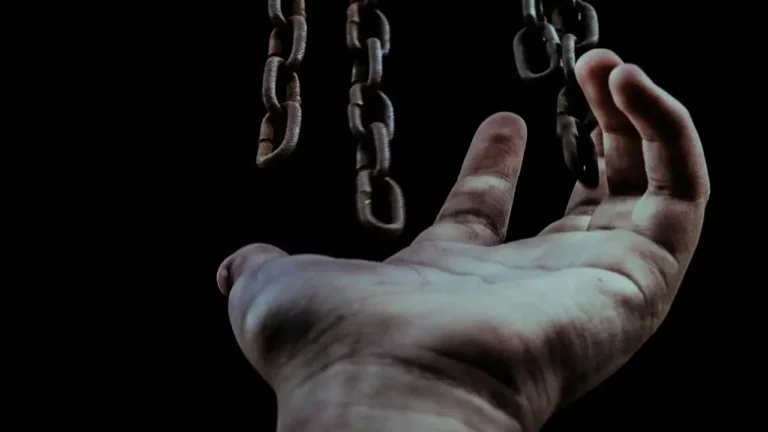
Imagine that scene playing out on a grand cinematic screen. Paul stands before a tense, whispering crowd, his voice cutting through the noise as he takes them back to the man he used to be. He reminds them of a dark, relentless chapter in his life—a man consumed by a misplaced fire, hunting down followers of “the Way.” In his mind’s eye, and now in ours, we see the images of past doors being kicked open, families torn apart, and both men and women being bound in chains and dragged off to dark prison cells. He had the full backing of the religious establishment, carrying official letters from the high priest and the council of elders like an arrest warrant of absolute authority. He was a man on a mission of destruction, riding hard toward Damascus to drag more believers back to Jerusalem to face punishment.
Then, the frame shifts, and the pacing slows down as we approach the fateful destination.
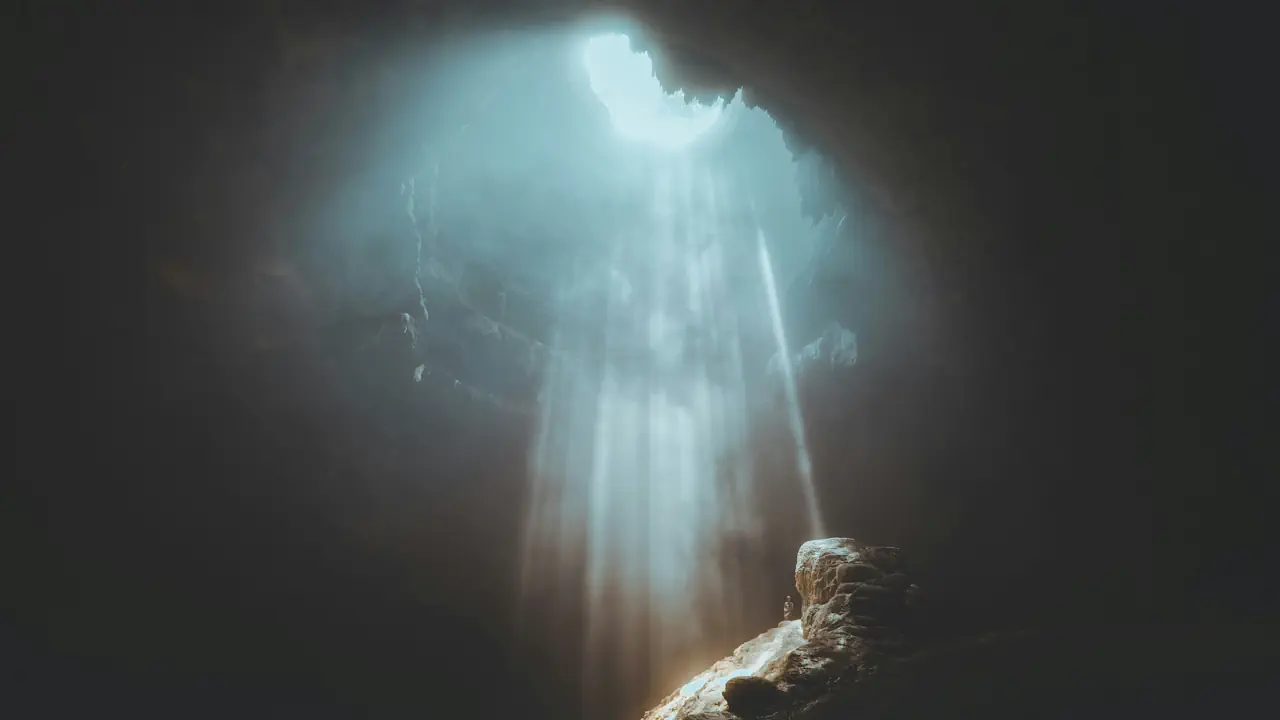
It is midday. The sun is at its peak, baking the desert road under a harsh, oppressive heat. Damascus is finally coming into view on the horizon. Suddenly, without warning, the screen flashes into a blinding, overwhelming white. A light far more intense than the midday sun explodes from the heavens, completely enveloping Paul. The sheer force of the brilliance knocks him clean off his feet, sending him crashing into the dirt.
As he lies there, blinded and trembling in the dust, the ambient sounds of the desert drop away, replaced by a booming, intimate voice that pierces the silence: “Saul, Saul, why are you persecuting me?”
Covering his face, squinting into a light he cannot look at, Paul chokes out a desperate question: “Who are you, Lord?”
The response comes back with absolute clarity, a declaration that changes the course of history forever: “I am Jesus of Nazareth, the one you are persecuting.”
Step back and look at the wider shot of the scene. The men traveling with Paul are frozen in place, a portrait of absolute confusion and terror. In their eyes, we see the reflection of the inexplicable, brilliant light that filled the sky, but as they look around at the dust settling on the road, they hear nothing but silence. They are completely blind to the heavenly conversation unfolding right in front of them—the moment a furious persecutor in Paul was utterly undone by the grace of the King.
The question for us today is whether we have experienced our own road to Damascus. Our moment may not involve a blinding physical light or a desert road, but the interruption of grace is just as real. Perhaps Jesus made Himself known to you through the persistent love of a friend, during a quiet moment in a church service, or while flipping through a Bible left in a hotel nightstand. The methods change, but the voice is the same. If Jesus is calling out to you today, how will you respond?
Reflection Questions
- Paul was completely convinced he was doing God’s work, even while walking in the wrong direction. How can we ensure our daily zeal and ambitions are aligned with the true, grace-filled Gospel of Jesus rather than our own ideas?
- Paul used his unique background—his Roman citizenship and his knowledge of Aramaic—to build a bridge to his listeners. What unique aspects of your background, language, or story has God given you to share His love with others?
- Think back to your own “Damascus road” moment when Christ first became real to you. How can remembering that initial encounter restore your passion and perspective for serving Him today?
Prayer
Father,
Thank You for the beautiful, disruptive power of Your grace. Forgive us for the times we rely on our own limited understanding or try to box You into what makes sense to our human minds. We praise You that You are the risen King, sitting at the right hand of majesty. If there is any area in our lives where our zeal is misdirected, gently correct our course. Open our hearts to hear Your voice, whether it comes in a quiet room or a crowded space, and give us the courage to respond with immediate faith and total surrender. In Jesus’ name.
Amen.