Acts 17:22-34 CSB
Paul stood in the middle of the Areopagus and said, "People of Athens! I see that you are extremely religious in every respect. [23] For as I was passing through and observing the objects of your worship, I even found an altar on which was inscribed, 'To an Unknown God.' Therefore, what you worship in ignorance, this I proclaim to you. [24] The God who made the world and everything in it-he is Lord of heaven and earth-does not live in shrines made by hands. [25] Neither is he served by human hands, as though he needed anything, since he himself gives everyone life and breath and all things. [26] From one man he has made every nationality to live over the whole earth and has determined their appointed times and the boundaries of where they live. [27] He did this so that they might seek God, and perhaps they might reach out and find him, though he is not far from each one of us. [28] For in him we live and move and have our being, as even some of your own poets have said, 'For we are also his offspring.' [29] Since, then, we are God's offspring, we shouldn't think that the divine nature is like gold or silver or stone, an image fashioned by human art and imagination. [30] "Therefore, having overlooked the times of ignorance, God now commands all people everywhere to repent, [31] because he has set a day when he is going to judge the world in righteousness by the man he has appointed. He has provided proof of this to everyone by raising him from the dead." [32] When they heard about the resurrection of the dead, some began to ridicule him, but others said, "We'd like to hear from you again about this." [33] So Paul left their presence. [34] However, some people joined him and believed, including Dionysius the Areopagite, a woman named Damaris, and others with them.
Address to Athens
The Areopagus is a prominent, bare rock hill located in Athens. In Greek, the name literally translates to the “Hill of Ares” or “Mars Hill,” named after the Greek god of war. Long before Paul’s day, it was the sacred place where the supreme council of elders met. In earlier history, this council possessed supreme authority over the city, acting as the primary governing body. It was the place where decisions against severe crimes were handed down and where solemn discussions over religion occurred. By Paul’s day, under Roman rule, the political power of the Areopagus council was somewhat restricted, but it still held immense authority over civil law, philosophy, public speaking, and the regulation or introduction of new, foreign religions into the city.
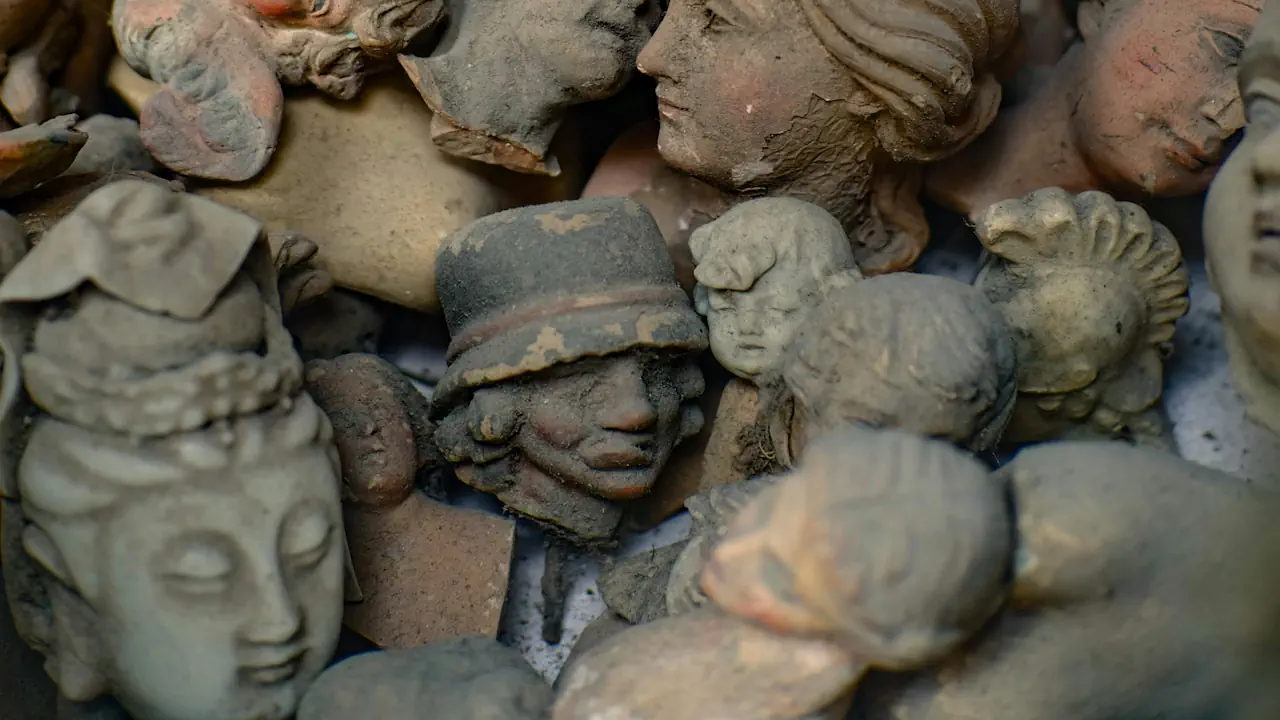
It was not that the Athenians did not believe in a god; in fact, they believed in a vast pantheon of many gods. However, these deities were either fashioned to resemble things that were created, or they were imagined as cosmic beings plagued with all the frail, corrupted human traits of mortals—lust, war, jealousy, and betrayal. In a single sentence, the Athenians worshiped created things instead of the Creator.
After Paul began debating with the Epicurean and Stoic philosophers in the Athenian marketplace, he was escorted up to this prestigious and highly intellectual council on Mars Hill. There were so many statues, monuments, and shrines to various gods packed into Athens that there was even a specific altar dedicated “To an Unknown God.” Paul brilliantly utilized this altar as common ground to establish a bridge to tell the philosophers about Jesus.
When Paul stood up to speak, he opened by commenting that the Athenians were extremely religious. This was not intended as a cutting criticism, but rather as a tactical commendation. Most of these people did not possess such an inflated ego that they openly called themselves gods, even if their private actions might have suggested it. Paul understood a vital rule of ministry: why insult the very people God sent His Son to die for, the very ones our Father in heaven loves?
Instead of attacking them, Paul begins his argument with creation. God is the sovereign Creator of everything that exists. Our loving Father is completely transcendent—He is not bound by time, space, or physical matter, nor does He inhabit man-made temples. Paul then points back to Adam as the single, historical source of all humanity, explaining that God sovereignly controls mankind and the unfolding of human history. Even national boundaries and historical eras are set up by God’s design.
Paul then reveals the ultimate purpose behind these divine boundaries: God works as the sovereign Creator with the specific intent that men and women might seek Him. The language used here suggests a blind person trying to “grope” or “feel around” to find something in the dark. It highlights that trying to find and know God purely through independent human effort, philosophy, or intellect is a remote possibility at best. God is inherently near to us, but our independent human groping always misfires, leading us to worship the created thing over the absolute Creator who made it.
Because of this tragic blindness, Paul explains that God has now clearly and definitively revealed Himself in His Son, Jesus Christ. The era of shadows is over; nothing is hidden anymore. Today, just as it was when Paul stood on the stone of Mars Hill, humanity no longer has an excuse. Our loving Father has revealed His character clearly in His Son, and He has provided absolute proof of this to the entire world by raising Jesus from the dead. We as human beings are left with a clear, unavoidable choice: we can either turn and worship the true Living God, or we can continue worshiping frail, man-made things.
To drive this home to the Greek philosophers, Paul quotes their own poets to show that we are the “offspring” of God. His logic is simple: if men and women are living, rational beings, then our Creator must also be a living, rational being. The living God cannot possibly be a inanimate, man-made object fashioned out of wood, stone, gold, or silver.
Because God is alive, Paul warns that a day of righteous judgment has been firmly established for those who refuse to turn and worship the Creator. But the moment Paul declared the physical resurrection, the foundational Greek view of life and death was fundamentally challenged. The prevailing philosophies of the day held that death either meant the total extinction of both body and soul, or the permanent liberation of the spiritual soul from the prison of the physical body. To them, the physical resurrection of God’s Son sounded like absolute foolishness.
They could not comprehend that Jesus’ earthly body, which had been clothed with all its human frailty and subjected to death, was raised and changed into a glorious, incorruptible body. Yet, this is the magnificent hope of all who believe in the Lord. How this transformation happens remains a profound mystery to the human mind. But as the Bible promises, the corruptible must take on incorruption. How a body can be raised after returning completely to dust is a matter resting entirely in the power of the Creator, who speaks light into darkness and calls things that are not as though they are.
The Epicureans and Stoics simply could not accept the immortality of our physical bodies after death, and so they mocked Paul’s message and walked away. Yet, Paul’s labor was not in vain. A few in the crowd believed, including Dionysius, a member of the Areopagus council itself, and a woman named Damaris. To those few who placed their faith in the resurrected Christ, eternal life in the Lord was graciously accorded.
Reflection Questions
- Paul used an altar to an “Unknown God” to bridge the gap between cultural idolatry and biblical truth. What are some of the “altars” or deep longings in our modern culture (such as the search for identity, purpose, or justice) that we can use as bridges to share the gospel today?
- Scripture notes that human philosophy left people “groping” in the dark for God, but the resurrection provides open, public proof. How does the historical reality of Jesus rising from the dead take Christianity out of the realm of mere human opinion and place it into the realm of absolute truth?
- The intellectual elite mocked Paul the moment he mentioned the resurrection because it didn’t fit their scientific or philosophical worldview. How can we find the strength to endure mockery from the culture when we stand firmly on biblical doctrines that the world labels as foolish?
Prayer
Father,
We praise You as the Lord of heaven and earth, the sovereign Creator who does not dwell in temples made by human hands. Thank You for not leaving us to grope blindly in the dark of our own human philosophies and imaginations. We thank You for revealing Yourself fully, clearly, and beautifully through Your Son, Jesus Christ, and for securing our ultimate hope through His glorious resurrection. Deliver us from the temptation to compromise Your truth just to avoid the mockery or ridicule of the world. Give us a deep passion for the lost, a spirit of boldness in our daily marketplaces, and a steadfast faith that rests entirely on Your power to bring life out of dust. In Jesus’ Name.
Amen.