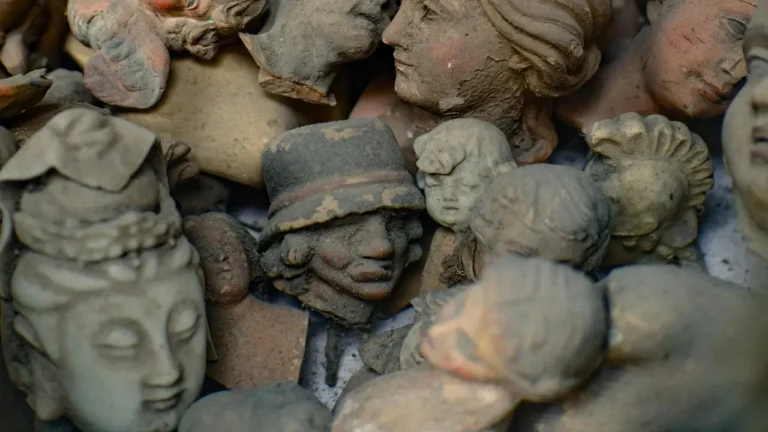
Acts 17:16-21 CSB
While Paul was waiting for them in Athens, he was deeply distressed when he saw that the city was full of idols. [17] So he reasoned in the synagogue with the Jews and with those who worshiped God, as well as in the marketplace every day with those who happened to be there. [18] Some of the Epicurean and Stoic philosophers also debated with him. Some said, "What is this ignorant show-off trying to say?" Others replied, "He seems to be a preacher of foreign deities"-because he was telling the good news about Jesus and the resurrection. [19] They took him and brought him to the Areopagus, and said, "May we learn about this new teaching you are presenting? [20] Because what you say sounds strange to us, and we want to know what these things mean." [21] Now all the Athenians and the foreigners residing there spent their time on nothing else but telling or hearing something new.
Simple Faith
While Paul waited in Athens for Silas and Timothy to rejoin him, his spirit was deeply distressed by the overwhelming sight of a city completely flooded with idols. True to his calling, he immediately began sharing the gospel—not only in the synagogues with the Jews and God-fearing Greeks, but also in the public marketplace every single day with anyone who happened to be passing by. It was here that Paul ran directly into two dominant, opposing schools of thought: the Epicureans and the Stoics.
The Epicureans looked for peace entirely in the present. They believed that the ultimate goal of human life was to achieve a state of tranquil peace, comfort, and absolute freedom from fear and pain. They were thorough materialists who placed human happiness in the pleasure of the body alone. To them, existence was purely physical; they taught that when you die, your body simply decomposes into stray atoms. Because they believed there was no afterlife, no final judgment, and no resurrection, their focus remained entirely on the horizon of this world. They did not outright deny that gods existed, but they claimed those gods were completely detached, distant, and utterly indifferent to human concerns.
The Stoics, on the other hand, believed in the supreme strength of the mind. Operating under a strict, rigid intellectual discipline, they believed that the universe was governed by a rational, divine order. To achieve true happiness, a person had to master their emotions, reject passions, and accept their cold fate without a single word of complaint. They placed human happiness solely in the virtue of the mind, viewing physical pleasure or pain as entirely irrelevant to a person’s worth. For the Stoic, true virtue meant being entirely self-sufficient, emotionally detached, and intellectually superior to every external circumstance. Furthermore, their concept of God was not a personal Father who loves humanity and is intimately involved in our individual affairs; instead, they viewed God as an impersonal, pantheistic force infused into nature.
To both of these deeply entrenched groups, the message Paul proclaimed seemed entirely foreign and bizarre. The idea of a physical resurrection was completely absurd to the materialist Epicureans, who believed the physical form dissolved forever at death. Meanwhile, the prospect of a permanently resurrected body was thoroughly unappealing to the Stoics, who viewed the physical body as nothing more than a temporary, low-grade cage for the intellect.
But Paul completely flipped the script on their philosophies.
The ancient Epicureans mirror our modern secular materialists, who live strictly for the comforts, wealth, and trends of today, operating under the modern motto, “You only live once.” Conversely, the Stoics perfectly represent the modern self-help, self-reliant mindset that falsely believes human willpower, grit, and intellect can save a person from reality. Paul exposed both of these patterns as deeply flawed, empty human traditions.
As believers, we do not seek to escape our bodies, nor do we believe they simply rot into nothingness; instead, we look forward to the day our bodies will be wonderfully changed by divine power to be like Christ’s glorified body. We do not worship the human mind; instead, we worship the Father, the Son, and the Holy Spirit. We worship Jesus, who redeemed both our bodies and our souls by His death and resurrection. The agonizing pain inflicted on Jesus at the cross was borne directly for our sins, and His triumphant resurrection marks our future path in Him.
What Jesus accomplished in perfect obedience to the Father’s will was an act of pure, breathtaking grace that remains completely unfathomable to modern-day Epicureans and Stoics alike. This beautiful reality of a salvation found entirely outside of ourselves is something that human philosophy could never invent or deduce. Our salvation is a miraculous, sovereign work of God, and not of ourselves.
Reflection Questions
- The Epicureans chased personal comfort and avoided pain at all costs, while the Stoics tried to harden themselves against suffering through pure willpower. How does the Christian view of suffering differ fundamentally from both of these worldly approaches?
- The Athenians and foreigners in the marketplace spent all their time doing nothing else but telling or hearing something new. How does our modern “information age” and social media culture mimic this distracting, endless craving for novelty, and how can we keep our focus anchored in the timeless truth of Christ?
- Paul’s message of salvation through Christ alone was labeled as “strange” and “ignorant” by the intellectual elite of his day. When have you felt the pressure of the world’s academic or cultural philosophies mocking the simplicity of the gospel, and how did you maintain your confidence in God’s Word?
Prayer
Father,
We praise You because Your wisdom far surpasses the highest heights of human philosophy, intellect, and worldly tradition. Deliver us from the empty traps of secular materialism that tempt us to live only for the comfort and pleasure of today. Deliver us also from the pride of self-reliance that tricks us into believing our own willpower or intellect can deliver us. Thank You for the simple, beautiful reality of the gospel—that our salvation is a work of Your pure grace, securely anchored in the death and resurrection of Jesus Christ. Keep our hearts away from the idols of our modern culture, and give us the boldness to share the good news of Jesus in our daily marketplaces with clarity, love, and unshakable faith. In Jesus’ Name.
Amen.